Delivering Seamless Visuals on the Road: Universal Pixels on Touring with ROE Visual
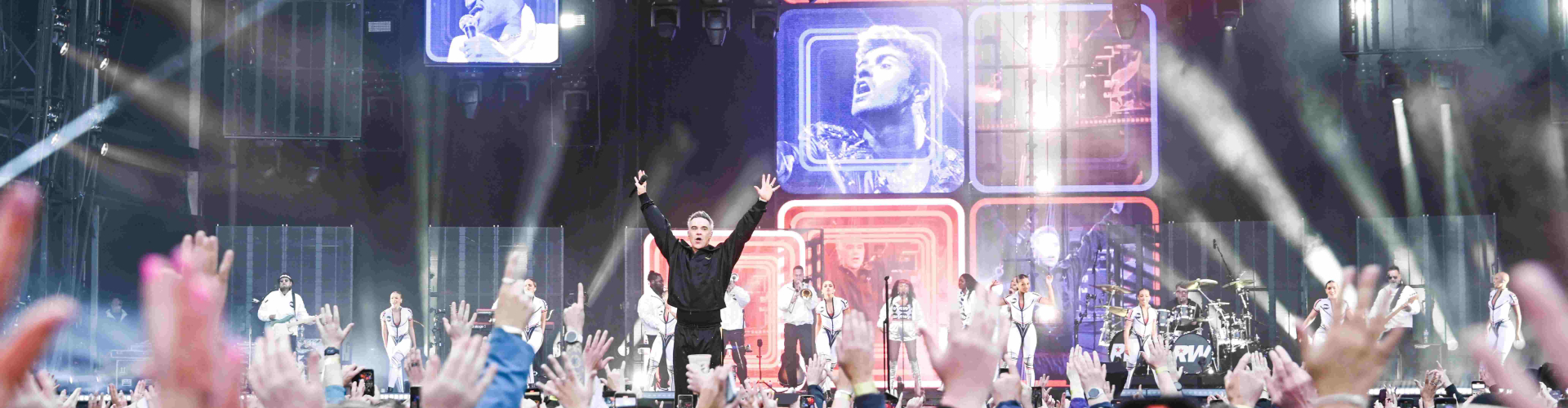
With an impressive lineup of tours under their belt this season — including Hozier, Robbie Williams, and Snow Patrol— the team at Universal Pixels has relied on ROE Visual LED technology to deliver consistent, high-quality visuals across a range of demanding live environments.
In this interview, Gary Manicom from Universal Pixels shares his insights on what makes ROE Visual products such a trusted choice for touring, how creative and technical teams collaborate to achieve flawless designs, and why reliability and speed remain at the heart of every successful production.

Credits: Universal Pixels
1. You have been out with ROE Visual on several tours this season – what has been the overall experience?
ROE Visual products have been solid for us this season on tours like Hozier, Robbie Williams, and Snow Patrol. We used V4ST, V8T, and ROE Strip, which were reliable, lightweight, and quick to rig. We even integrated the V8T into custom corner frames for the Robbie Williams tour.
2. When selecting the LED canvas for a show, how does the interaction between the creative and technical teams unfold? How do you make the final decision?
The V8T has such a strong reputation for transparent applications that creative teams often request it specifically by name. For other screens, they'll typically specify the pixel pitch they need, and we recommend the best product to meet both their creative vision and the practical realities of touring.

Credits: Universal Pixels
3. From a touring perspective, how do the ROE Visual LED panels perform in terms of robustness, setup time, and serviceability?
ROE products are of great quality and really robust, which is essential for touring. They handle the constant loading, transportation, and setup cycle remarkably well. The lightweight panels and intuitive rigging mean fast setup times – crucial when you've got tight turnarounds between shows.
4. What kind of daily maintenance routines or pre-show checks are most important for keeping the LED system reliable?
We run test patterns while building the screens each morning, and any modules with faults or dead pixels are swapped out. Before doors, we do another full sweep to catch anything that might have developed.
The visual design incorporated precise timecode syncing across multiple LED surfaces. How was this coordinated with the media server and lighting teams?
When the band is using a backing track, it is possible to feed LTC timecode into the media servers, allowing the video content to be synchronised with the music very accurately.
When there is no backing track, the video content needs to be triggered manually by the media server operator.

Credits: Universal Pixels
5. How do the LED surfaces interact with any live camera feed? Are there any limitations or things you need to take into account regarding camera exposure or lighting design choices?
We're increasingly seeing tours use live colour grading, with an operator at FOH adjusting color LUTs on the LED processors and media server outputs. This ensures screen colours stay true to life regardless of changing lighting conditions throughout the show. It adds another layer of coordination between departments, but it's become a key part of delivering consistent, high-quality imagery.
6. If you were to take this system on the road again, would you change anything in LED panel choice?
Nothing – ROE has been fine. The panels have proven reliable across all our tours this season.

Credits: Universal Pixels
7. How did the crew experience working with the ROE Visual panels—any standout features or improvements you'd highlight?
Lightweight, quick to rig, and reliable – those are the things that matter most on the road. The rigging is intuitive enough for local crew to pick up quickly, and the panels don't create problems that eat into setup time. When you've got a tight load-in schedule, kit that just works makes everyone's day easier.
8. What would you say is the biggest strength of the ROE Visual LED platform in large-scale touring environments like this one?
Reliability. In touring, you need kit that performs night after night, regardless of what you throw at it. ROE panels handle the constant loading, transport, and setup without missing a beat. Combined with their lightweight, quick-to-rig design, they're built for the road.

Credits: Universal Pixels
As touring productions continue to push creative and technical boundaries, partnerships like the one between Universal Pixels and ROE Visual play a crucial role in turning ambitious designs into seamless live experiences.
Built for the road and trusted by leading production teams worldwide, ROE Visual LED solutions continue to deliver the reliability, flexibility, and visual excellence that modern touring demands — show after show, night after night.